
How US President Donald Trump employed a clandestine 'decoy' Air Force One operation to secretly depart Turkiye following a NATO Summit.

'We caught General Pervez Musharraf talking over the phone with his Chief of General Staff Lieutenant General Mohammad Aziz. Musharraf was visiting China; Aziz was in Rawalpindi.'

The Maharashtra Anti-Terrorism Squad (ATS) conducted raids at over 40 locations across the state, including Mumbai, targeting individuals connected to Pakistan-based gangster Shahzad Bhatti, who is accused of influencing Indian youth towards anti-national activities through social media.

Prayagraj native Sumit Kumar is suspected to have passed on sensitive information related to air force operations, including details of fighter aircraft deployment, missile systems and information concerning officers and personnel.

Gen NS Raja Subramani has taken over as India's new Chief of Defence Staff, succeeding Gen Anil Chauhan. His primary focus will be on implementing the military theaterisation plan and enhancing tri-services synergy.
Pakistani security forces have killed at least 17 militants in Balochistan province following a deadly train attack last week, the army said.

India's position appears to be anchored around three red lines: Hasina's safety and the guarantee of a fair trial; assurances that Bangladeshi territory will not be used for activities hostile to India; and the restoration of an inclusive democratic process in Bangladesh.

The government has appointed Lieutenant General NS Raja Subramani (Retd) as the next Chief of Defence Staff (CDS), who shall also function as the secretary to the government of India, department of military affairs, with effect from the date of assumption of charge and until further orders.

A lesson for India is to clearly define objectives beforehand, so that the adversary or other parties do not attempt to mitigate them midway.

Pakistan and the Afghan Taliban have resumed peace talks in Istanbul, aiming to address cross-border terrorism and prevent further escalation. The talks follow recent clashes and a temporary ceasefire, with Pakistan demanding that Afghan soil not be used for terrorism.

Officials from Pakistan, Afghanistan, and China are meeting in Urumqi to discuss regional security concerns and potential confidence-building measures.
Afghans have deep self-respect and are the last people to put up with humiliation. Is it any surprise that relations between Afghanistan and Pakistan have touched an all-time low and the two countries are now at war? asks M R Narayan Swamy.

'If the government sincerely addressed the issue of missing persons, it would alleviate 80% of the grievances in Balochistan.' 'No matter how many development projects Islamabad announces for the region, the people will remain upset as long as their loved ones are missing.'

Dinesh Trivedi's success or failure in this fragile diplomatic equilibrium will have consequences extending well beyond the Indian high commission in Dhaka. It will shape India's eastern strategic environment for years to come.
'Can a nuclear-armed nation sustain itself indefinitely under overt military rule without catastrophic consequences for itself and the region? History suggests otherwise.'
Punjab Police have busted two ISI-backed espionage modules using high-tech, China-made solar powered CCTV cameras to transmit live feeds of sensitive military locations to Pakistan-based handlers.

As he settled down to his job as army chief, General Qamar Javed Bajwa -- who died last week; his passing did not merit even an obituary in major print or electronic media in Pakistan! -- developed a vision of reducing his country's and his institution, the army's traditional hostility toward India, points out Rana Banerji, who headed the Pakistan desk at RA&W.
A new report alleges Pakistan shielded Iranian military aircraft from potential US airstrikes, raising questions about its role as a neutral mediator in the ongoing US-Iran tensions.

Sri Lanka's response to the Easter attacks has been slow and politically contested, unlike India's swift institutional reforms after the 2008 Mumbai terror attacks, observes Colonel R Hariharan (retd).
Pakistan has handed over evidence-based demands to mediators in Istanbul talks with the Afghan Taliban, aiming to end cross-border terrorism. The talks follow recent border clashes and aim to defuse tensions between the two sides.

It is an unusual choice to depute a retired general for the funeral of a revered religious figure but a thoughtful one in an attempt to inject verve into the bilateral relationship and restore the equilibrium in India's West Asian policies, notes Ambassador M K Bhadrakumar.
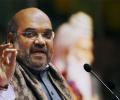
Union Home Minister Amit Shah hailed Operation Sindoor as a landmark mission, commemorating its first anniversary and underscoring India's military strength and resolve against cross-border terrorism.

While Asim Malik's role in Pakistan's recent warming up of relations with the US is acknowledged, army watchers note a recent distancing, what with Asim Munir not wanting his DG, ISI to share the limelight during his subsequent sojourns to Tampa and Brussels, points out Rana Banerji, who headed the Pakistan desk at RA&W.

Delhi Police's Special Cell has dismantled an inter-state terror, arms, and espionage module allegedly supported by Pakistani handlers and the ISI, revealing a covert surveillance network near sensitive military locations.
The Congress party has criticised the Modi government on the first anniversary of the Pahalgam terror attack, stating that Pakistan has gained global respectability due to the failure of Prime Minister Narendra Modi's foreign policy.

Egypt, Pakistan, Saudi Arabia and Turkey met in Islamabad in what analysts say is the formal opening of a new diplomatic formation that could reshape the post-war regional order. Their immediate goal is a ceasefire; their larger ambition is to ensure that neither Iran nor Israel emerges from this war in a dominant position. Pakistan's foreign minister then flew directly to Beijing and mooted a Chinese role as guarantor of any eventual agreement. Prem Panicker continues his must read daily blog on the Gulf War.
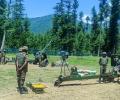
'India's security challenges are no longer confined to the Line of Control or the Line of Actual Control.'
'They also span cyber networks, economic systems, information warfare, technology ecosystems, maritime routes, and internal social cohesion.'
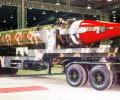
The US intelligence assessment highlights Pakistan's near-certain procurement of weapons of mass destruction-applicable goods from foreign suppliers, primarily through Chinese support.
'With a military-led strategy to counter terrorism emanating from Pakistan, India has clearly signalled that it would respond decisively to future terrorist threats.'

The Indian military will showcase an Operation Sindoor-themed tableau for the Republic Day parade, highlighting the jointness of the three services and India's military capabilities.

China supplied more than $20 billion worth of arms to Pakistan. These include 20 J-10CE and JF-17 Block III fighter aircraft, Wing Loong drones, frigates, submarines, Hongqi HQ-9P surface-to-air missiles, 240 PL-15E air-to-air missiles, LY-80 air defence systems, ZDK early warning aircraft and other weapons.

Multiple terror attacks in Pakistan's Khyber Pakhtunkhwa province during Ramazan have resulted in the deaths of security personnel, while security forces in Balochistan have killed several rebels in response.

A new US intelligence report warns that India and Pakistan's relations remain at risk for nuclear conflict, fueled by terrorism and escalating tensions in the region.
'The tools of warfare are changing. The MoD must deepen its engagement with technology thinkers that can present compelling visions of where warfare may be heading.'

The Dhurandhar movies will undoubtedly shape the minds of the audience much more than news reports, court investigations, books and documentaries. But it is worth remembering that Pakistan's irridentist claims against India's national security have succeeded due to strategic planning, diplomacy, and the unsung heroines and heroes across government agencies, not due to a single maverick leader, points out Shweta Desai.But it is worth to remember that Pakistan's irredentist claims against India's national security have succeeded due to strategic planning, diplomacy, and the unsung heroines and heroes across government agencies -- not a single maverick, points out Shweta Desai.

By all available indications, the White House drafted a face-saving note and handed it, ready-made, to Islamabad. Pakistani Prime Minister Shehbaz Sharif was supposed to then post it in the guise of a plea urging Trump to extend the deadline by two weeks 'to allow diplomacy to run its course'. Trump would then graciously accept Pakistan's 'request' and declare a ceasefire. Sharif dutifully posted the message on X. Except that he, or whoever was handling the account, forgot to delete the tell-tale first line visible in the edit history: 'Draft - Pakistan's PM Message on X'. Prem Panicker's must read blog on the Iran War.

Experts' worries intensified after Pakistan commissioned its first Chinese-built Hangor-class submarine, PNS Hangor, last month.
Records stretching back to 1947 suggest a consistent strategy by Pakistan's military and intelligence apparatus, the Inter Services Intelligence (ISI), of using terrorism as a state policy against India.

Lieutenant General Seth's involvement in the army's capability development and modernisation efforts is evident from the key appointments he has held in the Strategic Planning and Capability Development Directorates, including Colonel Capability Development for Mechanised Forces, Brigadier Perspective Plans and Acquisition, and Additional Director General Capability Development.

Chief of Army Staff General Upendra Dwivedi stated that the armed forces are fully prepared for 'Operation Sindoor 2.0' if the need arises, emphasising enhanced synergy across all three services for modern multi-domain warfare.
